

Good Offer. Wrong Assumption.
˙Sandeep Sura – “Not every decision is a calculation. Look for what really matters.”
[Approx; 5 minute read]
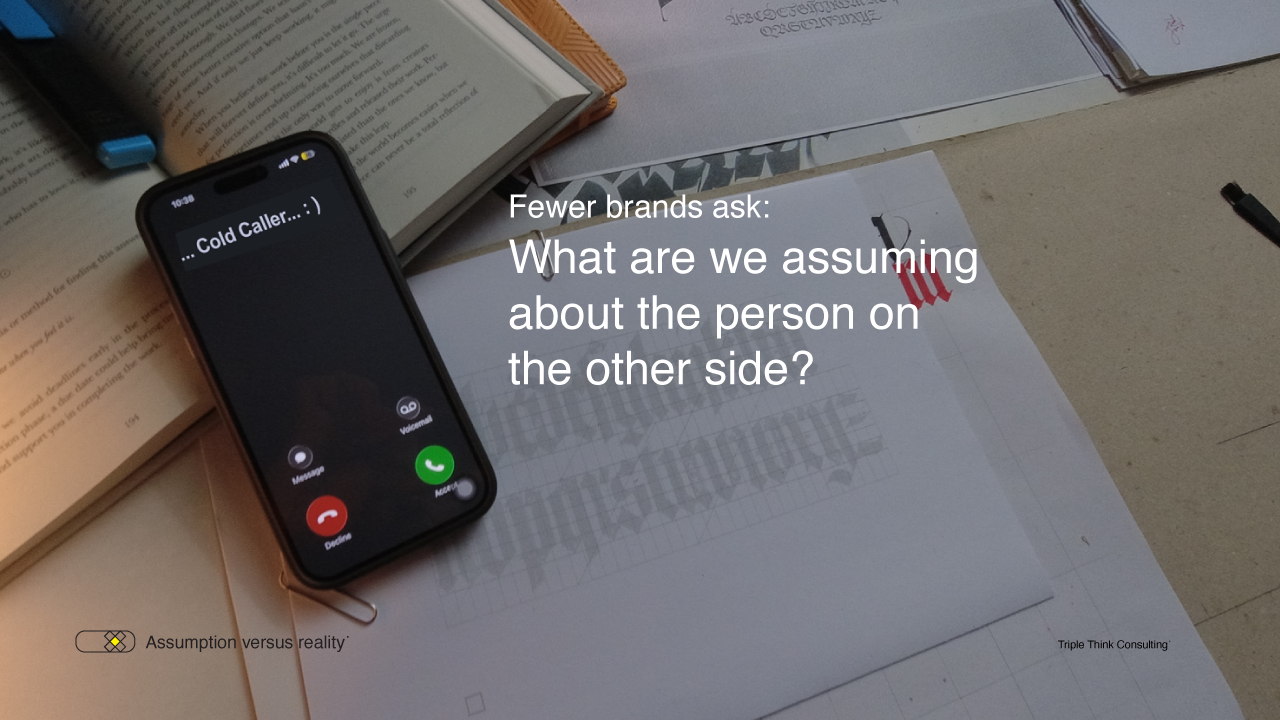
Recently, I took a cold call from a company selling coffee pods. The offer was genuinely good; savings, convenience, even a “new flavour” angle. But the pitch followed a blanket script, built on one assumption: that I regularly buy coffee outside! The truth is, apart from using a pod machine now and then, I also brew my own coffee, and this ritual is a big part of my routine. Maybe there should have been two scripts ready to roll.
Script one: “When was the last time you went out for coffee?”
Script two: “Hi… how do you usually make your coffee?”
…
Blog Contents
1.Beyond the Offer
2.The Part Logic Can’t Touch
3.What Brands Often Miss
4.FAQs
*Free PDF download - Brand Fit Worksheet
…
Project Overview: Brands that make me Think
…
1. Beyond the Offer
On the surface, a good offer is hard to argue with. Cheaper. Faster. Easier.
Brands are trained to lead with these levers because they’re measurable. They feel safe. They simply work.
But often isn’t always. There’s a layer beneath value propositions that doesn’t show up in spreadsheets: how a person already lives with a product, a moment, or a routine. And when a brand ignores that layer, even the best offer can feel misplaced.
Something to think about: A strong offer answers why you should buy. A strong brand understands why you already do what you do.
…
2. The Part Logic Can’t Touch
Whether it’s how you make your coffee, take a walk, or start your day; these are all small acts of control. They’re familiar. They feel personal. When a brand steps into this space, it’s not competing with alternatives, It’s competing with meaning.
That’s why people don’t always switch, even when it “makes sense.”
Because sense isn’t the only currency at play.
…
3. What Brands Often Miss
Most brands ask: How do we make this easier to choose?
Fewer ask: What are we assuming about the person on the other side?
In my case, the offer wasn’t competing with a better price or a better product. It was competing with a behaviour that already existed. And that’s where many brands lose people: by assuming one comparison, one habit, or one pitch fits everyone.
Before putting an offer into the world, here’s a simple way to pressure-test it:
What habit already exists here?
Is this offer enhancing it or erasing it?
Does this moment feel like help, or interruption?
If someone says no, what are they protecting?
These questions don’t weaken your pitch. They sharpen it. Because when brands understand the context of choice, they stop selling at people and start fitting into their lives.
…
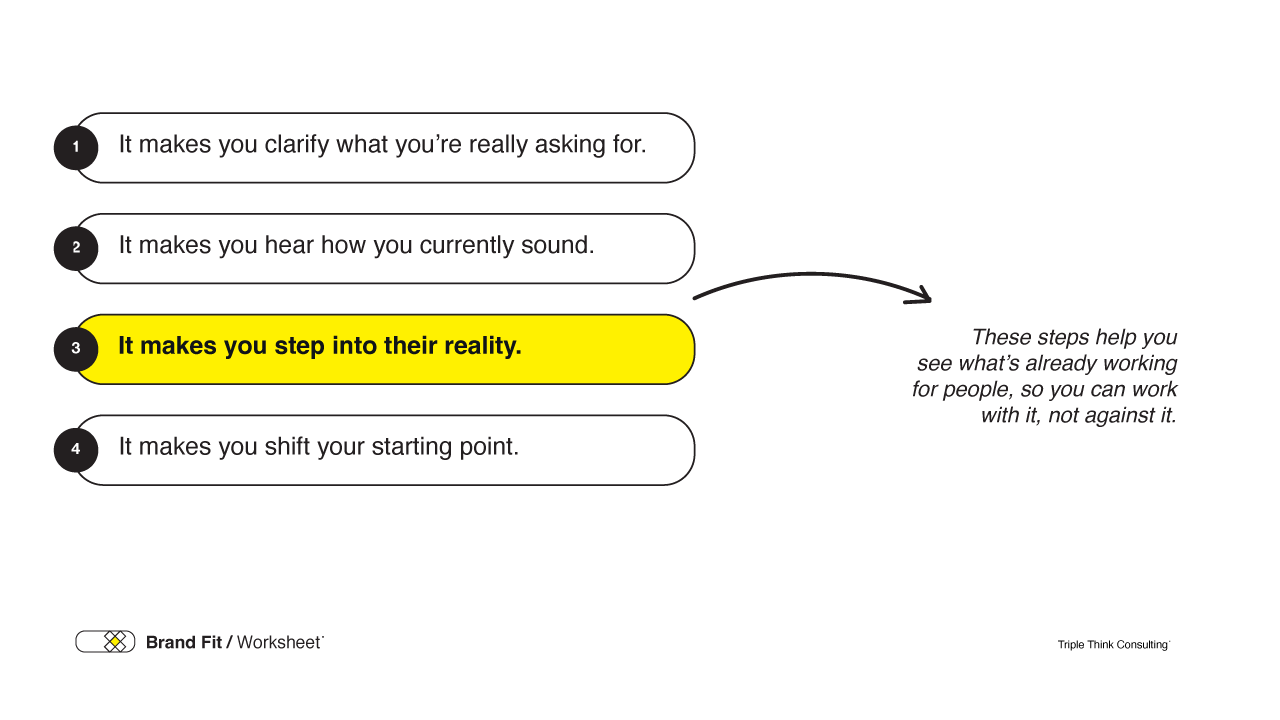
Want to try this yourself? Download my free Brand Fit Worksheet to see how the same offer can be communicated differently, without changing the price, product, or promise.
I also highly recommend; Thinking, Fast and Slow by Daniel Kahneman and Atomic Habits by James Clear. They offer useful perspectives on how decisions are shaped by habit, context, and emotion.
Click here to > Download my Free PDF - Brand Fit Worksheet
…
Conclusion
I realised something later that day; when you’re selling, it’s tempting to focus on logic, value, and efficiency. But, maybe it’s time brands relook the “one glove fits all” approach, because real choices aren’t made in averages: they’re made in habits, moments, and personal routines that don’t always look the same.
#TripleThink #BrandBehavior #ConsumerDecisionMaking
…
FAQs
1. Why don’t people always choose the most logical option?
Because decisions aren’t made in isolation. Human decision-making is shaped by habit, emotion, and context: not just price or convenience. People often protect routines that already work for them, even when an alternative appears objectively better.
2. What separates a good offer from a relevant one?
A good offer focuses on value. A relevant one understands context. Brands that recognise how people actually live can design offers that feel timely, personal, and worth considering.
3. How do habits and routines influence long-term brand loyalty?
Habits shape loyalty more than one-time promotions. When a brand fits naturally into a person’s routine, it builds familiarity and trust, making it harder to replace, even when competitors offer better pricing or convenience.
Hello! I’m Sandeep Sura, Founder and Creative Director of Triple Think Consulting. With over two decades of experience in the Advertising industry, my passion for everything that has to do with Brand building drives everything I do. I love blending my creativity with strategy to deliver impactful work. If you have any more questions or want to collaborate on any projects for your brand - feel free to get in touch. To contact me > click here
Thank you for reading! I’d love to hear your questions or thoughts - leave a comment below!